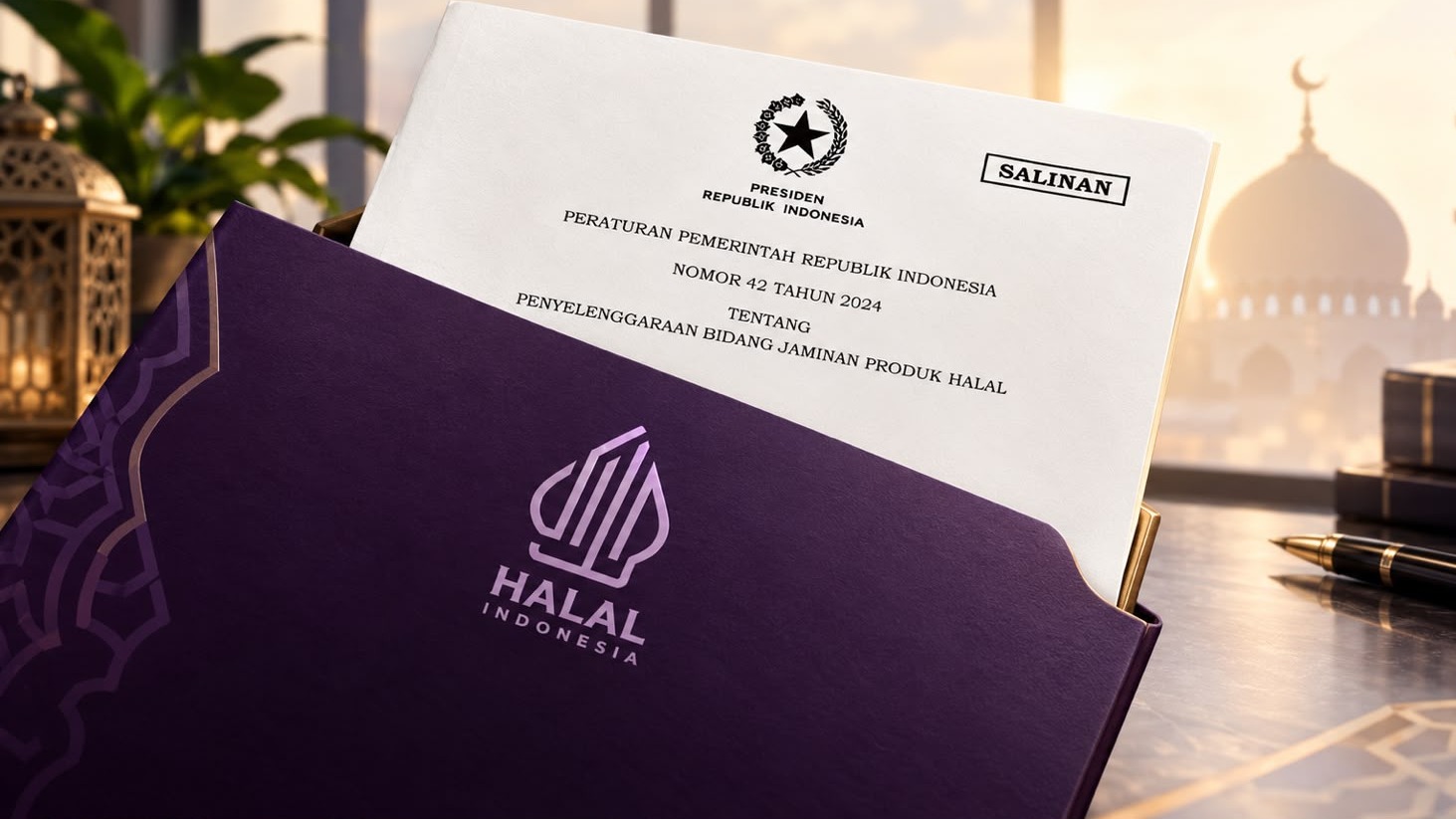
For businesses in the food and beverage sector, October 18, 2026, is a crucial date that must not be missed. Starting on that date, all products from micro and small enterprises (MSEs) ranging from processed foods and beverages to slaughtered meats must have obtained halal certification. This requirement is not a new concept, but rather a continuation of an obligation that has been in place since Law No. 33 of 2014 on Halal Product Assurance and reaffirmed through Government Regulation No. 42 of 2024 on the Implementation of Halal Product Assurance.
Policy Background
In fact, the halal certification requirement for medium and large businesses has been in effect for some time—since October 18, 2024. Meanwhile, the government has granted a special grace period for micro, small, and medium enterprises (MSMEs) until October 2026, with the aim of giving small businesses time to adapt, obtain their Business Identification Number (NIB), and prepare for the certification process without facing sudden penalties. Once this deadline has passed, there will be no further room for delay.
Products That Must Be Certified
Under Government Regulation No. 42 of 2024, this requirement applies not only to food and beverages. Its scope includes:
Processed foods and beverages;
Slaughter products and services;
Raw materials, food additives, and auxiliary ingredients for food and beverage products;
Cosmetics;
Traditional medicines and health supplements; as well as
Certain chemical products and genetically modified organisms.
This means that restaurants, cafes, and even home-based food businesses classified as micro, small, and medium enterprises (MSMEs) are required to comply with these regulations.
Convenience for Micro, Small, and Medium Enterprises: The Self-Declaration Scheme
The government does not automatically burden MSMEs with a complicated certification process. A “Self-Declaration” scheme is available, which is a mechanism for business operators to independently declare the halal status of their products, with guidance from Halal Product Process Facilitators (PPH) and final approval by the MUI Fatwa Commission. This scheme applies to products made from raw materials whose halal status has been confirmed and whose production processes are simple (on a household scale, not factory-based). Through the SEHATI (Free Halal Certification) program, the cost of applying for this scheme can be reduced to as low as Rp0.
Consequences of Noncompliance
Enforcement of these regulations now has more concrete tools at its disposal. The Halal Product Guarantee Agency (BPJPH) has issued BPJPH Regulation No. 2 of 2026 on the Imposition of Administrative Sanctions for Violations of Halal Product Guarantee Implementation. The sanctions that may be imposed are tiered, ranging from written warnings, administrative fines, certificate revocation, product recall, to suspension of operations and revocation of business registration numbers.
Recommendations
Given that the certification process takes time and that the backlog at BPJPH is likely to surge as the deadline approaches, food business operators—particularly small and medium-sized enterprises (SMEs)—are advised to immediately verify the legality of their businesses, raw materials, and production processes, and then submit their halal certification applications before October 18, 2026.
This article is intended for general informational purposes only and is not intended as legal advice for any specific case. For further consultation regarding your business’s legal compliance, please contact our team.