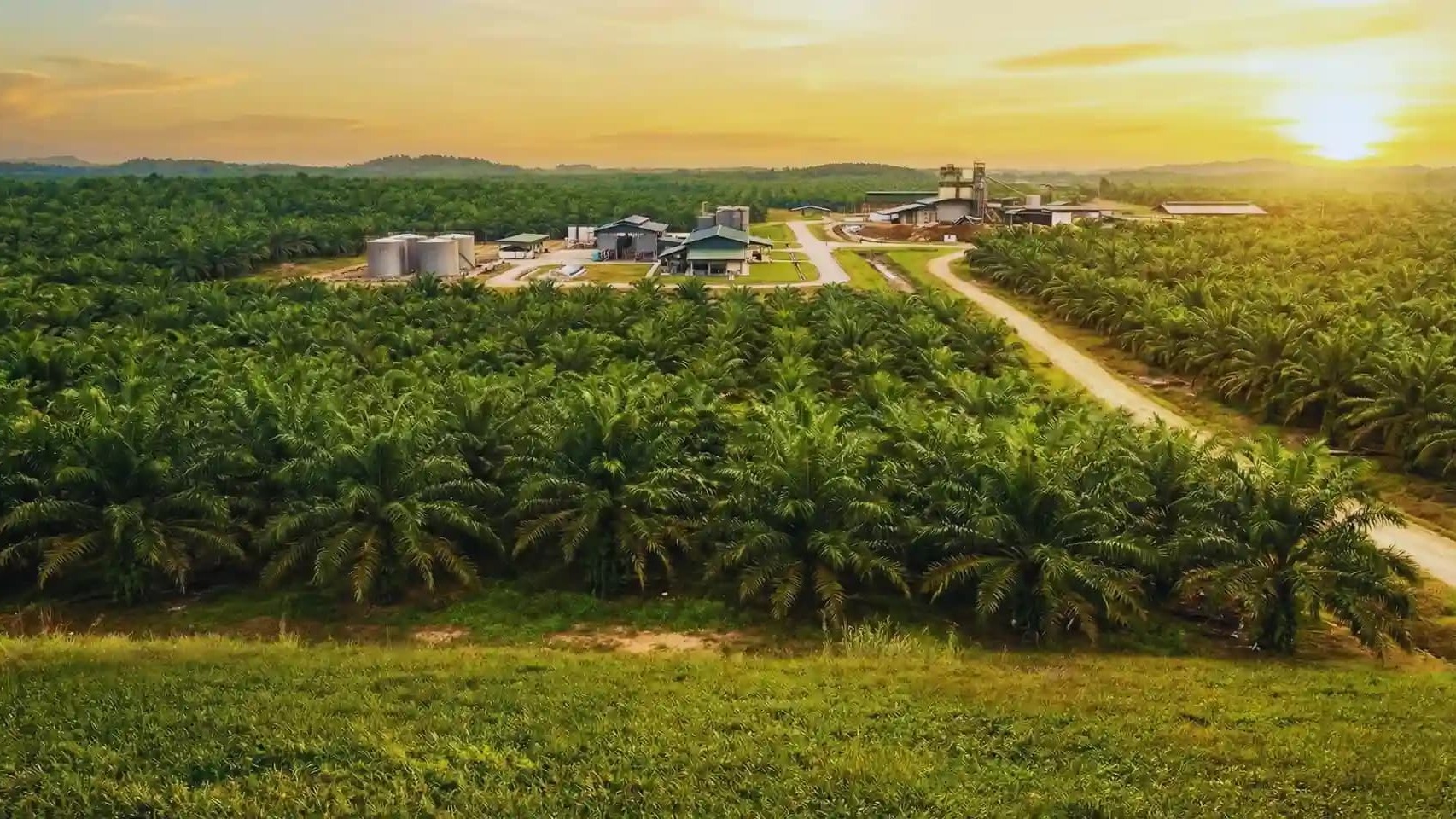
Indonesia’s palm oil industry remains a magnet for foreign investment. In addition to its large market size as the world’s largest producer of crude palm oil (CPO), another draw is the length of land tenure, which can be very long—up to 95 years. So, how does this actually work, and is it true that foreign nationals can directly own palm oil plantations in Indonesia?
Not Direct Ownership, but Through a Foreign-Owned Company (PT PMA)
Let’s set the record straight from the start: Foreign nationals cannot personally own oil palm plantations in their own names. The applicable scheme is through Foreign Direct Investment (FDI), whereby a foreign national or foreign legal entity invests by establishing a Foreign Direct Investment Limited Liability Company (PT PMA) in Indonesia. Foreign nationals may own an oil palm plantation business through foreign direct investment in the form of a PT, either by acquiring shares at the time the PT is established or by purchasing shares in an existing company.
These provisions refer to Law No. 39 of 2014 on Plantations, Law No. 25 of 2007 on Investment, and Government Regulation in Lieu of LawNo. 2 of 2022 on Job Creation, which has been enacted as Law No. 6 of 2023.
Investment Value Requirements and Government Approval
Not all foreign investors are automatically permitted to enter the market. Foreigners may only invest in oil palm plantations with an investment value exceeding Rp10 billion, excluding the value of land and buildings. If the investment is made through the acquisition of an existing oil palm plantation company, the process must be approved by the central government.
Regarding equity ownership stakes, the rules governing investment sectors—as set forth in Presidential Regulation No. 10 of 2021, as amended by Presidential Regulation No. 49 of 2021 — essentially allow foreign investment in palm oil plantations with processing facilities up to a majority ownership stake, with the additional requirement to develop community-based smallholder plantations for local residents.
Where Does the Number 95 Come From?
This figure stems from the mechanism for extending the Right to Cultivate (HGU), which is a right that grants its holder—including foreign-invested companies (PT PMA)—the authority to cultivate state-owned land for plantation activities for a specified period. Under Law No. 5 of 1960 on the Basic Provisions of Agrarian Law (UUPA), an HGU is generally valid for a maximum of 25 to 35 years for the initial grant, plus any extensions.
This scheme, which ultimately resulted in a total of 95 years, refers to the practice of granting HGU rights in stages: an initial period of 35 years, extended by 25 years, then renewed for another 35 years, bringing the total to 95 years if all extension phases are approved by the government. Officials from the Ministry of Agrarian Affairs and Spatial Planning/National Land Agency (ATR/BPN) even explicitly mentioned this pattern in relation to companies applying for a third-stage HGU extension: companies that have already enjoyed 60 years (the first 35 years plus a 25-year extension) then apply for an additional 35 years, bringing the total to 95 years.
There Is a Binding Obligation
It should be noted that this extended duration does not come without conditions. Palm oil companies seeking to extend their HGU in the third phase are required to provide plasma plantations as a form of partnership with local communities, with the government gradually increasing the required share—from approximately 20 percent to 30 percent of the total across all phases. Without a commitment to plasma plantations, the HGU extension permit may not be granted.
Steps for Establishing a Palm Oil Business by a Foreign-Owned Company (PT PMA)
In general, the steps that foreign investors must take include:
Establishment of a foreign-owned limited liability company (PT PMA) through the OSS (Online Single Submission) system, with an investment commitment in accordance with the regulations.
Risk-based business licensing refers to Government Regulation No. 5 of 2021 on the Implementation of Risk-Based Business Licensing (now updated by Government Regulation No. 28 of 2025).
Application for a Plantation Business License in accordance with the guidelines from the Ministry of Agriculture.
Application for a Business Use Right to land submitted to the Ministry of Agrarian Affairs and Spatial Planning/National Land Agency (ATR/BPN).
Fulfillment of plasma plantation obligations and corporate social responsibility (CSR) toward the surrounding community.
With long-term business rights and an ever-improving legal framework, the palm oil sector remains one of the most attractive investment opportunities for foreign investors—provided that all administrative requirements and social commitments are consistently met.
This article is intended solely for informational and public education purposes; it does not constitute legal advice or a recommendation to take any specific legal or business action. Legal provisions are subject to change at any time; therefore, readers are advised to verify the most up-to-date information through relevant official sources.
If you need further consultation or legal assistance regarding the topics above—whether it involves starting a business, obtaining permits, or handling other legal matters—please do not hesitate to contact our team of professionals. We are ready to help provide the right legal solutions tailored to your needs.